
Tokyo to Mount Fuji: How to Get There and Which Side to Visit
17 September 2026
Fuji is not a single sight with a single entrance. It is a huge mountain with towns on several sides, and each side shows the mountain from a different angle and is reached a different way. Choosing the wrong side from the start is why many people arrive and feel the trip was not worth it.
Choose the Side First, Then How to Get There
Most people ask how to get to Fuji, when the first question should be which side to go to, because the three main areas offer very different experiences.
Kawaguchiko, the Lake Side
This is the side that gives you the full mountain reflected in the water, as seen on postcards, and it is the most visited side. Around the lake there is a ropeway up to a viewpoint, seasonal flower gardens, and the Chureito Pagoda, the famous spot for photographing a red pagoda with Fuji behind it. If it is your first visit and you want that classic picture, this side suits you best.
Hakone, the Onsen Side
Fuji appears further away here and not as completely as from Kawaguchiko, but you get other things instead: hot springs, the pirate ships on Lake Ashi, the ropeway over the steaming sulphur valley of Owakudani, and an open-air museum. It suits people who want a trip with more to do than look at the mountain.
Gotemba, the Shopping Side
This is home to the largest outlet mall in Japan, and on a clear day you can see Fuji from inside the outlet grounds. It suits people who want shopping and a view in the same day. If you are coming only to see Fuji, though, this side offers a more ordinary angle than the other two.
Three Ways to Get There, and Who Each Suits
This table compares time and flexibility rather than price, because each option is charged differently and prices change with the season.
| Point | Direct bus | Train | Private car with driver |
|---|---|---|---|
| Time from Tokyo | About two hours to Kawaguchiko, traffic permitting | About two to two and a half hours, including changes | About two hours, leaving whenever you like |
| Changes needed | None, board at Shinjuku and ride to the end | One or two changes | None |
| Flexibility during the day | Low, you must return on the departure you booked | Moderate, but late trains are far apart | High, you can change plans mid-day |
| Visiting several spots around the lake | Requires local buses on top | Requires local buses on top | One continuous journey, no waiting |
| Luggage | Can go under the bus, but you carry it all day | Hardest of the three, you need to find lockers | Stays in the vehicle all day |
| Who it suits | One or two travellers visiting a single spot and returning | Travellers who already hold a rail pass and are not in a hurry | Families, larger groups, children or older travellers, or anyone wanting several stops |
What the table does not tell you is that the direct bus from Shinjuku is the most used option and fills very quickly on holidays, especially in the autumn leaf and flower seasons, so book ahead rather than buying at the counter. The train route is also less direct than people expect: you change at Otsuki onto the Fujikyu line, a small line with infrequent services.
If you are going there and back in a day from Tokyo, allow about four hours of travel in total, which leaves around six hours on the ground. That is enough for either Kawaguchiko or Hakone, but not both.
Leaving Tokyo around seven in the morning and getting back around five in the evening works best. Leave later and you hit inbound traffic and lose the light before you get your pictures.
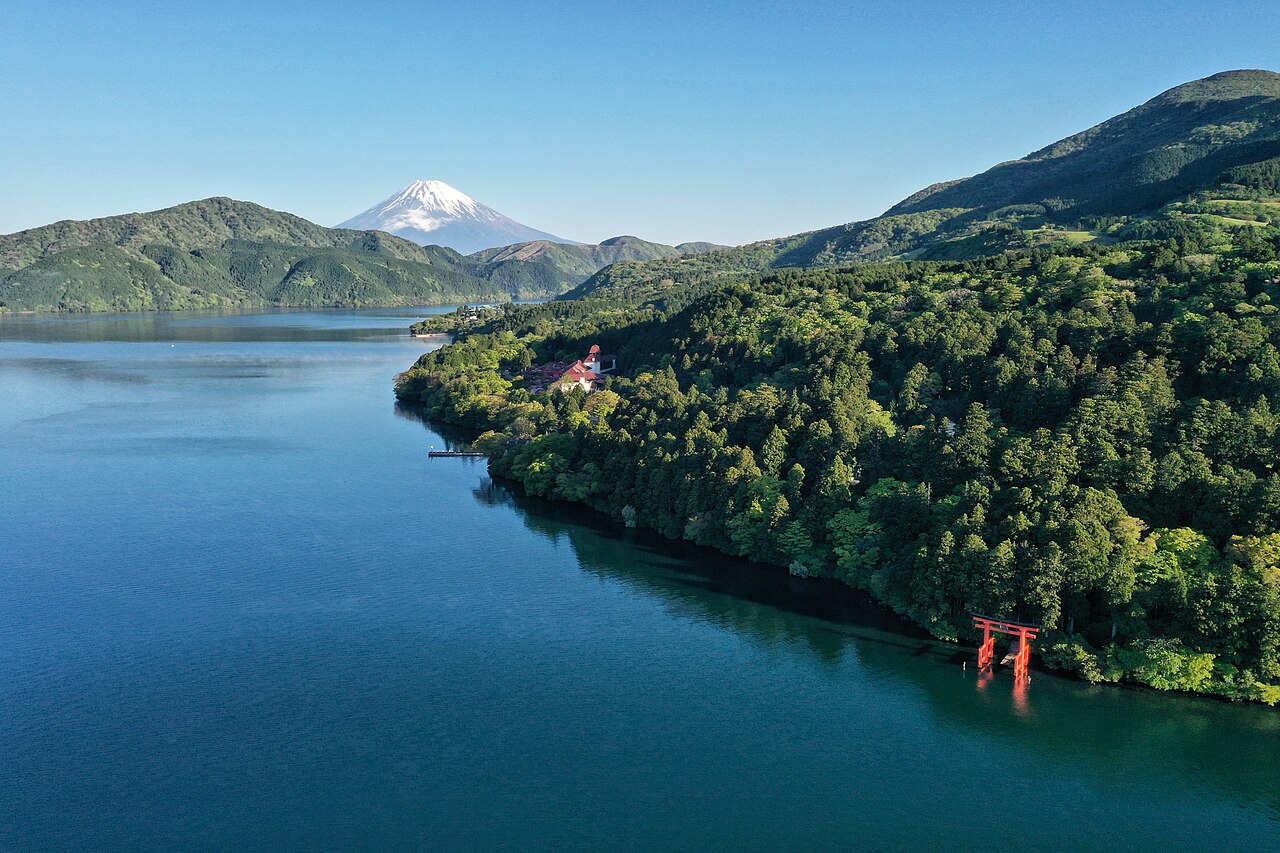
When You Are Most Likely to See Fuji
Accept before you go that Fuji does not show itself every day. Cloud hides it far more often than people think, and nobody can promise it will be visible on the day you go.
What helps is choosing the right season. December to February is the driest and clearest time of year, with a noticeably better chance of seeing the whole mountain than in other seasons, and the snow-capped summit is at its most beautiful then too. Summer is the hardest time, because humidity is high and cloud builds around the mountain almost every afternoon.
The time of day helps just as much. Early morning, before the sun gets strong, is when the sky is clearest. By mid-morning cloud starts to gather around the summit. If you are serious about photographs, reach the viewpoint before nine.
If the sky is overcast, there is still plenty to do. Hakone has hot springs and museums, and Kawaguchiko has the old village of Iyashi no Sato and lakeside cafes. Having an indoor backup plan means the day is not wasted.
How Far Up the Mountain Can You Go
Visitors who are not climbing can drive up to the Fifth Station, roughly halfway up the mountain. There are shops there and a viewpoint looking down over the lakes below. It is the closest you can get to the mountain without hiking.
Be aware that the road to the Fifth Station closes in winter because of snow, and during the climbing season there are restrictions on vehicles going up. Check whether the road is open for your dates before planning. If it is closed, the viewpoints around the lakes give views just as beautiful and are open all year.
Many of the best Fuji photo spots are spread around the lakes, on different sides from one another. Local buses run infrequently and in loops. Having a vehicle lets you move between spots as the light changes, which matters a great deal on days when the clouds keep opening and closing.
More Articles You May Like
A Long Layover at Narita? Explore the Towns Around the Airport on a Free Tour
Narita Airport has brought back its Transit & Stay Program after six years.
Tokyo to Mount Fuji: How to Get There and Which Side to Visit
A comparison of three ways to reach Mount Fuji from Tokyo and who each one suits, plus which side of the mountain to visit and when you have the best chance of seeing the summit.
Shirakawa-go: The Thatched Village in the Mountains, and the Best Season to Go
Shirakawa-go is a village of thatched farmhouses in a mountain valley where people still live today.
Let Us Plan a Route That Suits Your Group
Tell us how many are travelling, how many days, and where you would like to go. We will plan the route and send you a quotation free of charge.